
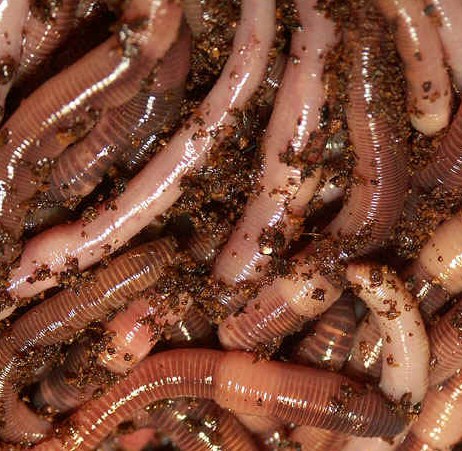
 Jokes aside, as the managing director, I do place the company's concern as a priority, and that is why the business in worms is important, The potential of recycling and land remediation. Today the BBC has just written an article about land remediation using worms, and you can see it here.
 Recent studies have shown worms being able to remove toxic chemicals from lands, however it has been known for centuries that worms are the intestines of the Earth. Worms compost and recycle organic waste, and also remove any impurities in them. There are more than 4000 different species of Earthworms, and each one are more suited or better adapted for particular environments. The ones used in the studies are probably Lumbricus terrestris and Aporrectodea tuberculata. These are burrowing worms you usually find in the UK gardens, and they dig deep down making burrows coming to the surface only to feed.
BEEcycle currently focuses more on composting only, and the worms that we use are slightly different. We use what are called 'soil dwellers', which stays near the surface of the soil feeding on organic matter non-stop making it more suitable for wormery bins. Examples of these species are Eisenia Foetidas and Eisenia Hortensis (formerly known as Denrobaena Veneta).
These are also the 'secret' to the composting action of our OvO's, and we definitely won't be limiting our future use of earthworms here!


 Posts
Posts


No comments:
Post a Comment